Blog

Burial Day Books is a boutique publisher of supernatural horror.  Once a week we research a particular element dealing with superstition, folklore or myth and write a short piece about that element from the Gravedigger’s perspective. These elements were sometimes used somewhere in a previous horror story in history. Or, these elements could have been pulled from particular ideals, or from items that illicit fear. We may also discuss curious traditions that we feel admirers of horror, and beyond, would enjoy learning. Our blogs, while written from a fictional character ‘s perspective, are non-fictional. Overall, our blogs discuss true beliefs, phenomena, practices or customs.


I purchased several bags of candy today. It’s not that we particularly expect Trick-or-Treaters  at the funeral home, but you
  I am getting excited! Each day the veil that separates the world of the living and the world of
I’ve been occupied. Quite more occupied than normal and I blame a painful increase of workload around these parts. So,
Edgar Allan Poe
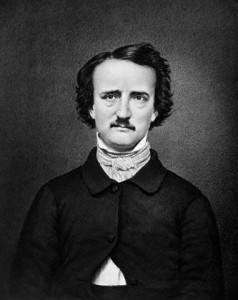
In memory of Edgar Allan Poe, who died October 7, 1849  here is a video of The Raven performed by
Gothic Blue Book
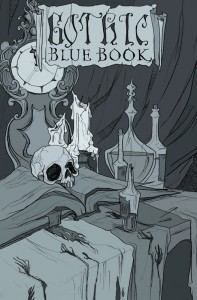
Check out the preliminary cover for the Gothic Blue Book, just a few more tweaks and it will be ready
Hey Everyone! Halloween is just around the corner now and we want you to share your spooky real life ghost
  My birthday was Friday and I note it mostly for pity as I am getting older. Another year passes
An interesting shift in my life has occurred - my dreams have been strange as of late. Really, I have
Many cultures believe in life after death. Many funeral rites we have seen here are done so with the belief
All full moons have a name, as they very well should. I learned this one especially cold January as I
The Evolution of Halloween

I purchased several bags of candy today. It’s not that we particularly expect Trick-or-Treaters  at the funeral home, but you never know. One must always be prepared for Halloween.

The roots of our present day Halloween were planted thousands of years ago with Roman festivals, Celtic harvest celebrations and The Catholic Church’s commemoration of the dead. Customs and traditions around harvest time varied throughout Europe. Then, the people of the colonies eventually began to celebrate the harvest, but it took quite some time for the Protestant powers to welcome the practices. At first, they started holding “play parties” which were public parties with food, music, dancing, fortune telling, and ghost stories. Small acts of mischief also began to occur around this time. By the middle of the nineteenth century fall festivals were held all across the country, but it was still not yet called Halloween.

European immigrants continued streaming into America and it is believed that the potato famine of 1846, which brought a flood of Irish to the states, gave Halloween the jolt it needed to live in the states. Irish and English traditions mixed and melded and soon people began wearing costumes and going from house to house asking for food and money around the harvest. Still, people continued to believe that around the 31st of October was an ideal time to make predictions and so young women would play divination games with yarn, apples and mirrors – often to determine who would be their future husband.

By the late 1800s there was an effort to wipe away the superstitious and supernatural aspects of the holiday. The media and community members tried to make the day more about families, parties and children than religion or the dead. By the 1930s the day became practically secular. Community parties, parades, and school celebrations took over the day. The 1950s turned the day into a family-focused holiday, and due to the surge of children after the baby boomers Trick-or-Treating was revived as it was seen as a community activity.

So, have the ghosts really been pushed away? Has the mischief really been erased? How do you celebrate Halloween today? What traditions remain? What superstitions remain?

More soon.

-Gravedigger

Before Halloween, before Samhain, there were other days of the dead!


I am getting excited! Each day the veil that separates the world of the living and the world of the dead is slowly being pulled back. Soon, the dead will walk among the living! Things around the cemetery surely get much more interesting on Halloween night.

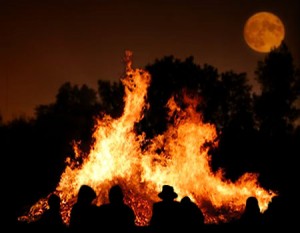
When people think of the ancient origins of Halloween they often refer to the Celtic festival of Samhain. The Celts lived over 2,000 years ago. They lived in the areas that are now Ireland, England and France. On October 31st, they celebrated Samhain, a harvest festival – and also a day that they believed the boundaries of life and death were blurred. In addition to great feasts, wearing costumes of animal skins and heads, and lighting bonfires, the Celts also believed that this was a perfect time of year to make predictions. With spirits nearby, they believed that it was easier for Druids/Celtic priests to predict future outcomes of events.

However, Samhain is thought by some to be the combination of several festivals that were celebrated way before the ancient Celts. It is believed that what eventually became Samhain, and today our Halloween, was a mix of several ancient Roman festivals – Parentalia, Feralia and the festival of Pomona.

Parentalia was a nine-day festival that was held in early February and honored the family’s ancestors. Offerings of flowers, bread, wine and sweets were left on family tombs during this time. The day after Parentalia ended the festival of Feralia began. Feralia celebrated the Manes, or the spirits of the Roman dead. Families would hold banquets on Feralia as a way to celebrate with their dead. The festival of Pomona came later in the summer in August. Pomona was the Roman goddess of fruit and abundance.  While she is not directly associated with the harvest, she is associated with the flourishing of fruit. In paintings and sculptures she is typically depicted with plates of fruit, and is often associated with apples. Bobbing for apples anyone?

From Parentalia to Feralia, to Pomona we were given Samhain in late October. As Christianity spread, the Catholic Church instituted All Saint’s Day to commemorate saints and martyrs and shortly after All Soul’s Day to honor all of those who have died.

So, how did we go from bonfires and animal skins, saints and martyrs, to costume parties and candy? We will talk more about that tomorrow, but remember still friends… ancient people of varying backgrounds and cultures believed that lines are blurred October 31st. Do you believe lines will fade and the dead will be close enough to you this day to whisper in your ear? We shall see.

-Gravedigger

The dead will soon walk among the living!

I’ve been occupied. Quite more occupied than normal and I blame a painful increase of workload around these parts. So, apologies for being away for far too long. Unfortunately, the Undertaker too has been extremely busy. Perhaps it is because a certain holiday we all adore around these parts is approaching?

The leaves are changing color and the air is growing cooler. Pumpkins are now visible on front porches and we can all feel the electricity in the air increase with each day that brings us closer to Halloween. I am very much looking forward to this great day of celebration and superstition. When thinking of our modern holiday of Halloween, we must acknowledge the previous holidays that influenced this day.

Samhain – The Celts, who lived over 2,000 years ago, celebrated their New Year on November 1st.  The festival marked the end of the harvest, the end of the light (summer months) and the beginning of the dark (winter months). They also believed that the night before their new year, October 31st, that the line that marked the world of the living and the world of the dead became blurred.

All Saint’s Day – In the 8th century, Pope Gregory III wanted to designate a day in which all of those who had been beatified would be remembered, and so November 1st was set as the day to commemorate and honor saints and martyrs.

All Soul’s Day – In 1,000 AD, the church designated November 2nd as the day to honor all those who had died.

Over the years, traditions and customs of each of these days were mixed and mingled to bring us what is our present day Halloween.

Over the next few days I will talk more about each of these days, and their customs, as well as the present customs practiced today for Halloween.

Just a few more days remain until the line is blurred between the world of the living and the world of the dead? Are you ready?

More tomorrow.

-Gravedigger

Edgar Allan Poe Nevermore

In memory of Edgar Allan Poe, who died October 7, 1849  here is a video of The Raven performed by Vincent Price.

Enjoy.

For The Raven text click here.

Gothic Blue Book Cover

Check out the preliminary cover for the Gothic Blue Book, just a few more tweaks and it will be ready for the October 28, 2011  release. The  Gothic Blue Book will be available on Amazon’s Kindle and hard cover. More details soon.


Gothic Blue Book

Halloween Spooky Ghost Story Contest


Hey Everyone!

Halloween is just around the corner now and we want you to share your spooky real life ghost story with us! Just post your real life haunted tale in the comments area below and the scariest story picked by the Gravedigger will get a free copy of our Gothic Blue Book due to be released on October 31st, of course. We look forward to those real life scary horror stories!

Scare Us!

Birthday and the Lunar Effect


My birthday was Friday and I note it mostly for pity as I am getting older. Another year passes and I enter another year with hopes, aspirations, and goals – all the while continuing to elude death. Friday evening, the Undertaker wanting to do something appropriate for my day of birth, chose to take me on a ghost tour of our fair city.  This was quite a treat considering the Undertaker rarely likes to venture away from his work. Still, we arrived at the location and I was surprised to find my brother there, as well as some other family members to enjoy the haunted histories and terror of our town. Yes, my friends, the Gravedigger does have siblings and family. They are quite interesting, but I guess people who do not work in cemeteries and graveyards are expected to be…odd folk.

At one point during the tour, my brother said to me “There’s a full moon out. Perfect for your birthday.”

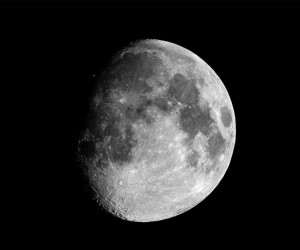
I quickly corrected him. “It looks almost full, but it is not. We are in a waxing gibbous moon.” He rolled his eyes and grumbled that he didn’t know “what gibbous means.” Gibbous, from the old Latin word gibbus, means “hump” and refers to the hump shape that the moon appears to have during this phase.

The September full moon, the Harvest Moon, rises this Sunday. My real name means “one of the moon,” and so I have always been fascinated with the moon and its phases, while always being somewhat afraid of the Lunar Effect, a claim by some that states people’s behavior changes during a full moon. There is very little hard, scientific evidence to confirm proof of the Lunar Effect, sometimes referred to as the Transylvanian Hypothesis. Folklore and pseudoscientific evidence has tried for years to prove that there is a rise in deviant human behavior during this time. Insomnia, insanity, or “lunacy” and other magical phenomena (lycanthropy) are thought to rise during a full moon. Countless scientific studies have disproven a connection between the full moon and an increase in strange behavior during this time. Yet, why do we still believe that extraordinary things are possible when the moon is full and bright against the nighttime sky?

Regardless of what you believe, Sunday’s full moon will remain low in the sky for a few nights, bringing light to our dark. If you feel a bit more animated, a little more jumpy, or hear the howling of a dog, or maybe even a wolf, do not fear…because it’s not like there’s proof of the moons magical power…or is there?

More on the full moon soon…


-Gravedigger

Bad dream? It could be a nightmare, a night terror, or an Old Hag

An interesting shift in my life has occurred – my dreams have been strange as of late. Really, I have been having terrible nightmares.

Nightmares are disruptive dreams that cause intense feelings of sadness, fear, anxiety, dread, and horror. There are people who suffer from recurrent nightmares, and these can sometimes be tied into post-traumatic stress disorder, where individuals play back an event or pattern nightly. when you soff from these events, meaning that you are constantly replaying them over and over in your head. And the longer this goes on, the worse it’s going to get. When it starts to disrupt your sleep, then you know that it could be time to do something about it. In adults, for example, health and wellness products such as CBD oils have been known to have a positive effect on anxiety, PTSD, and disrupted sleep and you may feel your symptoms relieving soon. The horrible thing about nightmares though is that they could affect anyone. You may find that nightmares are not very common in children under 5, but they are common in younger children, and most common in teenagers. Adults can also experience them, and some do on a weekly basis.

I read that nightmares can be caused by a variety of stresses, physical discomfort, and of course anxiety and stress. Eating before bedtime, which can increase metabolism and thus brain activity, can also stir nightmares.

Work related stress, I believe, have contributed to an increase in nightmarish activity in my night time world. Recently, in my dreams, I have found myself among cannibals, suspicious authoritative individuals in positions of power attempting to obtain some type of knowledge from me, as well as blank scenes void of hope and happiness, as well as gruesome scenes full of despair and terror. Sometimes I manage to wake up from these nightmares, while other times I am stuck, trapped to delve further into sad and fearful scenarios.

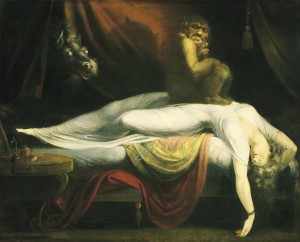
Last night I was able to wake myself from a nightmare, but then something terrible happened. I just laid there in an awful state of fear, unable to move, barely able to breath, and worst of all unable to scream. I was paralyzed for some minutes, feeling only an intense pressure upon my chest. When I finally broke free of this spell I sat up in my bed and screamed, and screamed. After some moments the Undertaker opened my door, and he looked rather displeased.

Standing there, by the door, in his black robe, black pajama pants and black pajama shirt, he showed very little emotion or urgency as he flicked on the light switch.

“If you’re going to start having night terrors on a regular basis Gravedigger I ask that you perhaps consider sleeping outside.”

Before I could answer he closed the door.

I was not having a night terror. Night terrors, sleep terrors, or pavor nocturnus, occur mostly in children between the ages of 2 and 12, but they can occur in adults. What is most frightening about night terrors is that the person experiencing them is usually said to bolt upright from their sleep, with eyes wide open, and with a panicked expression. The individual screams and is often inconsolable for a few moments. They can be confused, unaware of their surroundings, and the identities of the people (even closest loved ones) trying to wake them up. When they wake from it they typically have no recollection of experiencing the episode.

Yet, again, I was not having a night terror. What I was experiencing was a hag. Modern science today is said to have explained old reports of hags. They now call this phenomena sleep paralysis. Yet, years, and years ago people believed that when they were having nightmares it was caused by a hag. The hag was thought to sit on the sleepers chest and send them nightmares. Some people have reported that they have actually awakened to see an old, wicked looking woman sitting on their chest. There are even reports of some people claiming to have been stalked by a hag all their life. Even stranger, there have been reports of people claiming a family member was killed by a hag that would not leave their loved one alone.

There are varieties of hags such as hag’s that appear in folklore and frightening children’s stories, such as Hansel and Gretel. Nightmare hags are believed to be from the Old English mæra, a supernatural being with ancient Germanic roots. The mæra, or mara, or mare, is the Scandanavian version of this being. There have been accounts of mare’s in Norse tales as far back as the 13th century. It is believed that the belief in these beings goes even further back in history.

It is getting late now my friends and I have much, much work to attend to in the graveyard tomorrow. I must prepare for bed time and I only hope that my dreams are not disturbed by nightmares or fears, or worst, by that old hag.

-Gravedigger

Do you believe in ghosts? Some ancient philosophers did.

Many cultures believe in life after death. Many funeral rites we have seen here are done so with the belief that the deceased will carry on, in some form, preferably in some place that is peaceful.

Living in a funeral home, and working in a cemetery, you tend to see many, many curious things, but the question I hear all too often is “Have you ever seen a ghost?” Typically, I smile and give a vague response such as “This is a cemetery. What do you think?”

Now, I like to be vague because you never know what people are going to believe. I do find the belief in ghosts intriguing. I am also fascinated with the wealth of research that has gone into supporting ghost sightings. One must consider that the belief in ghosts predates written record, and ultimately the debate of whether or not ghosts exist is as old as human history.

Greek philosopher Plato (424/423 BC–348/347 BC) believed that the soul was a pre-existing entity. Therefore, its survival was not dependent on having a body. Plato made a distinction between a soul and an apparition – believing that an apparition was a soul that was weighted down by bodily impurities, impurities taken on while the soul was in the body. Now, he believed that apparitions were able to be seen by the living because of these impurities. Thus, he believed an “apparition” was a ghost.

Another philosopher, and one of the most educated of his time, Plutarch (46-120 AD), was a believer in the supernatural. He went on to argue in the existence of ghosts, stating that even the educated, and great minds from even his past, had given strong reports of encounters.

Pliny the Younger (61–112 AD), a lawyer, author and magistrate of Ancient Rome, had also given accounts of ghosts in his letters:

“What particularly inclines me to give credit to their existence is a story which I heard of Curtius Rufus. When he was in low circumstances, and unknown in the world, he attended the newly made governor of Africa into that province. One afternoon as he was walking in the public portico he was extremely daunted with the figure of a woman which appeared to him, of a size and beauty more than human. She told him she was the tutelar Genius that presided over Africa, and was come to inform him of the future events of his life: that he should go back to Rome, where he should hold office, and return to that province invested with the proconsular dignity, and there should die. Every circumstance of this prophecy was actually accomplished…”

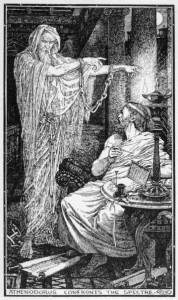
Pliny the Younger, in his letters, also went on to give one of the earliest accounts of a haunted house that involved Athenodorus Cananites (74 BC – 7 AD):

“It happened that Athenodorus, the philosopher, came to Athens at this time, and reading the bill [of the house] ascertained the price. The extraordinary cheapness raised his suspicion; nevertheless, when he heard the whole story, he was so far from being discouraged, that he was more strongly inclined to hire it, and, in short, actually did so. When it grew towards evening, he ordered a couch to be prepared for him in the fore part of the house, and after calling for a light, together with his pen and tablets, he directed all his people to retire within. But that his mind might not, for want of employment, be open to the vain terrors of imaginary noises and apparitions, he applied himself to writing with all his faculties. The first part of the night passed with usual silence. Then began the clanking of iron fetters; however, he neither lifted up his eyes, nor laid down his pen, but closed his ears by concentrating his attention. The noise increased and advanced nearer, till it seemed at the door, and at last in the chamber. He looked round and saw the apparition exactly as it had been described to him: it stood before him, beckoning with the finger. Athenodorus made a sign with his hand that it should wait a little, and bent again to his writing, but the ghost rattling its chains over his head as he wrote, he looked round and saw it beckoning as before. Upon this he immediately took up his lamp and followed it. The ghost slowly stalked along, as if encumbered with its chains; and having turned into the courtyard of the house, suddenly vanished. Athenodorus being thus deserted, marked the spot with a handful of grass and leaves. The next day he went to the magistrates, and advised them to order that spot to be dug up. There they found bones commingled and intertwined with chains; for the body had mouldered away by long lying in the ground, leaving them bare, and corroded by the fetters. The bones were collected, and buried at the public expense; and after the ghost was thus duly laid the house was haunted no more.”

From ancient times to today, people have given accounts of ghosts stories, as well as the argument for the belief in the existence of ghosts. I find these reports curious and so will continue digging into historic accounts of ghosts and apparitions to share them with you. Ultimately, it does not matter what I believe. Ghost stories abound. For generations philosophers, the educated, and common every day people have shared their ghostly encounters with one another. Ultimately, it’s fascinating that the belief in the supernatural continues into today.

Today, some of the most advanced tools of technology are used in investigating ghost claims, but one tool from Ancient times remain – the human mind, and with that people will continue to debate whether or not ghosts exist.

-Gravedigger

Which full moon rises?


All full moons have a name, as they very well should. I learned this one especially cold January as I was researching the belief of werewolves among varying cultures. I was curious and so wondered what an internet search of “January” and “Werewolf” would turn up and I found that January’s full moon is indeed called the Wolf Moon. I found this very exciting. I ran out of my room to share this bit of information with the Undertaker. I knocked on his door and asked if he was awake. He opened the door looking rather displeased, as I had clearly woken him.
“Did you know that the January full moon is called the Wolf Moon?”

“What are you going to tell me next,” he grumbled. “That the howls that come from the woods surrounding the cemetery are those of werewolves?”

He then closed the door.

I personally believed that those howls outside of the cemetery grounds were a little strange, too strange to be made by the average wolf, but I’ll talk more about that another day.

Each month that month’s full moon has a designated name. These names were applied by the Native Americans of what is now the north and eastern parts of the United States. The names they chose for each of these month’s moons were dependent on either a superstition or tradition unique to that particular month.

January – Full Wolf Moon – This name came from the hungry growls of wolf packs during cold, bitter winters. It has also been referred to as the Old Moon, Snow Moon, or Moon After Yule.

February – Full Snow Moon – As some of the heaviest snow falls occurred during this month this is what the Native Americans called it. It has also been referred to as the Full Hunger Moon as heavy winters made hunting difficult.

March – Full Worm Moon – Earthworms began to appear with the thaw leading to this name. However, the crows began to caw signaling the end of winter. This lead to the northern tribes calling this the Full Crow Moon. It has also been called the Full Crust Moon, the Full Sap Moon or the Lenten Moon.

April – Full Pink Moon – Herb moss pink gave this moon its name and probably also wild ground phlox. Full Sprouting Grass Moon, Egg Moon, and Full Fish Moon are names also applied to the April Full Moon.

May – Full Flower Moon – Flowers are in bloom this month which lead to this name. Full Corn Planting Moon and Milk Moon have also been used.

June – Full Strawberry Moon – The season of harvesting strawberries is short and so this is why it is believed this name was applied. In parts of Europe this moon is called the Rose Moon.

July – Full Buck Moon – The antlers of new deer were now visible during this month. This moon was also known as the Full Thunder Moon by some tribes due to heavy summer thunderstorms.

August – Full Sturgeon Moon – The fishing tribes of the Great Lakes are thought to have influenced this name. Sturgeon was heavily fished during this month. The Full Moon in August also rises red and so some tribes called this the Full Red Moon. Other names included the Green Corn Moon and Grain Moon.

September – Full Corn Moon – This is the time when corn is to be harvested. September’s Full Moon is also popularly known as the Harvest Moon but it is not always a true Harvest Moon. See October.

October – Full Harvest Moon – This is a tricky Full Moon. Every two years or so this moon falls in September, but typically it occurs in October. With the bright light of this moon farmers were able to harvest well late into the night.

November – Full Beaver Moon – Beaver traps were set during this time for their furs for winter clothing. These furry creatures were also preparing their homes for the winter. Novembers Full Moon is also called the Frosty Moon.

December – Full Cold Moon – The nights are long, dark and cold and sometimes this moon is also called the Full Long Nights Moon. This moon has also been called the Moon before Yule.

The folklore and superstition behind a full moon is rich and varies from culture to culture. Next time you look at a full moon recognize that it has a name and also know that people long before you were looking up at this moon, this very month, in awe.

Now that we know their names we look forward to telling you more about the folklore surrounding full moons soon.

-Gravedigger